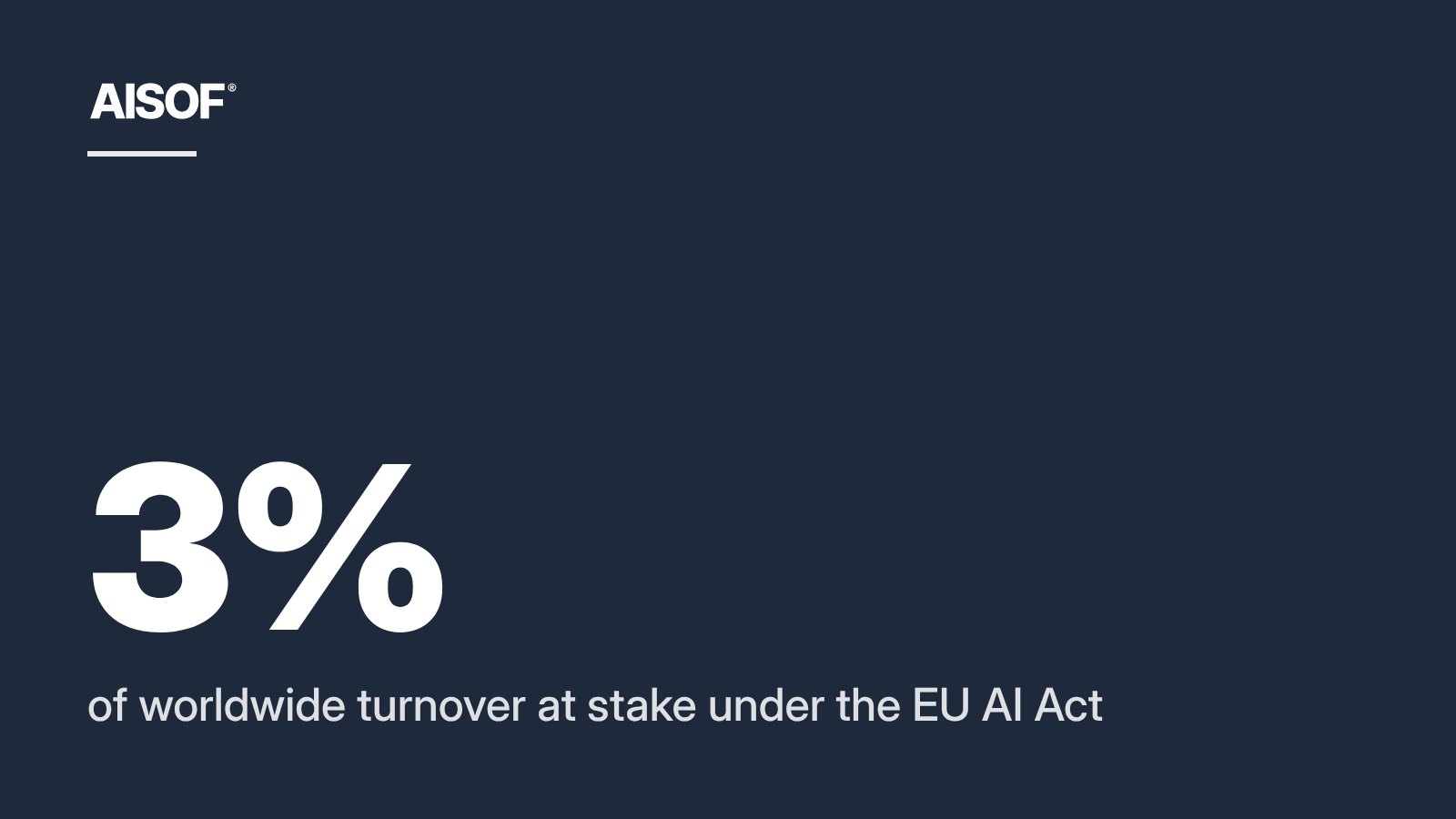
Article 50 of the EU AI Act, the transparency obligations, became enforceable on 2 August 2026. Content that looks or sounds like a real person must be labelled, and the obligation applies even where there was no intent to deceive and no real individual is depicted. Chatbots and virtual agents must tell people they are AI, immediately and perceivably during the interaction, not in terms and conditions. Penalties for infringement reach 15 million euro or 3 percent of total worldwide annual turnover, whichever is higher.
Two details catch organisations out. The first is that intent is irrelevant: a marketing team generating a synthetic presenter with no deceptive purpose is in scope. The second is that disclosure must be perceivable in the interaction itself, which rules out the standard approach of burying it in a policy nobody opens.
Territorial reach follows the familiar pattern. If the output reaches users in the European Union, the obligation follows it, regardless of where the organisation sits.
Compliance here is an evidence problem more than a technical one. An organisation needs to know every place it generates or deploys synthetic content and conversational AI, which is an inventory question, and to show that the labelling and disclosure work as claimed, which is a testing and record keeping question. Both are exactly what an evidence first framework asks for before any regulator does.
Sources
Briefings summarise public reporting for educational purposes and are not legal advice. Editorial policy